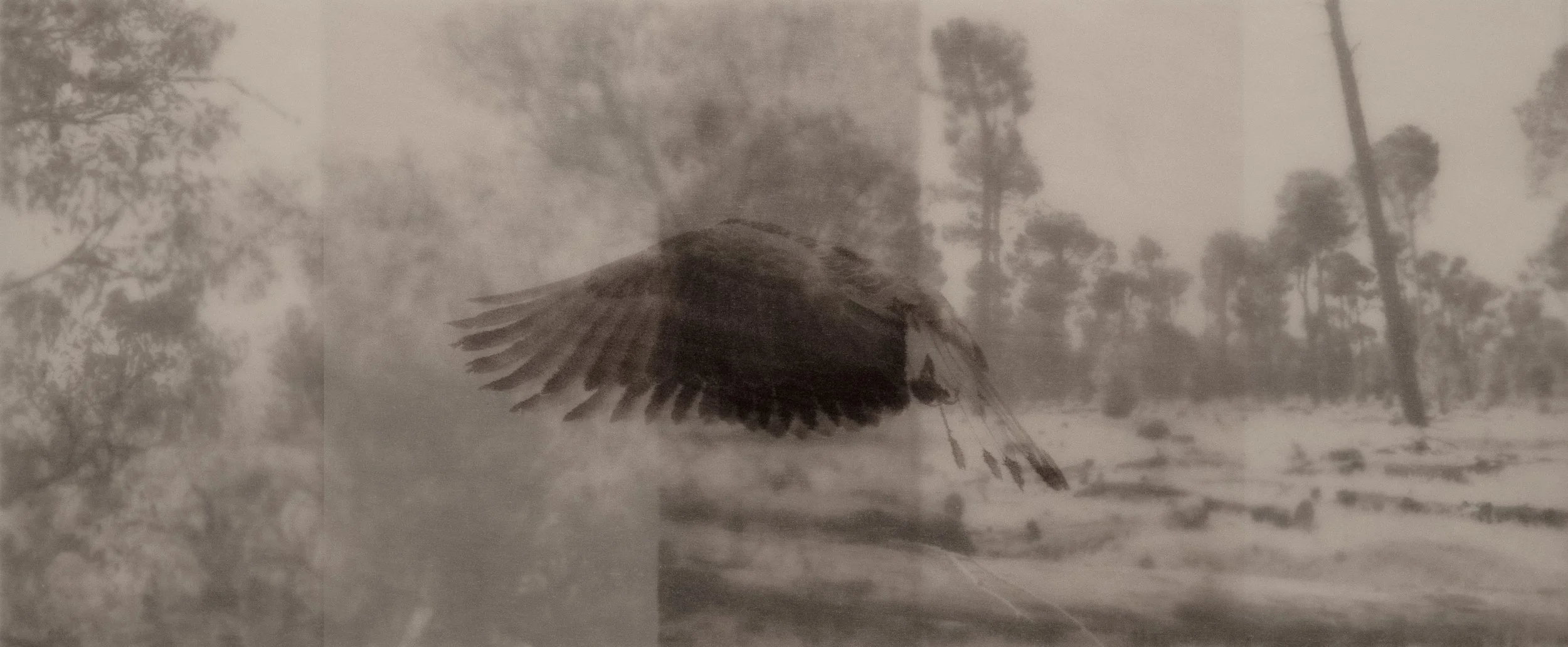
Traces, 2025.
Traces #2, 2025
Traces photographically presents a story of resilience lived by the endangered Carnaby’s Cockatoo, known in the Noongar language as Ngoolarks.
Once seen flying in the thousands, Ngoolarks have survived the mass clearing of their habitat, Banksia woodlands, and the subsequent clearing of the pine plantations, which they adapted to as a vital source of food. Today, they face the possibility of extinction in the next 20 years, unless intervention is taken to protect their remaining habitat and food sources.¹
Ngoolarks are semi-migratory birds that spend February to June in the Banksia woodlands of the Swan Coastal Plain, flying to the Wheatbelt to breed from July to January. Due to land clearing in both areas, much of this habitat has been lost, with flight in the present context holding new meanings of displacement.
Though more vulnerable than ever, Black Cockatoos have emerged as an important emblem for action against the logging of native bushland in the South West - with hope that their story of resilience can inspire the protection of the irreplaceable native ecological communities we have left.
Traces was shown as a photographic series of six images projected in sequence, accompanied by audio recordings of Ngoolark conversations.
Works as part of UWA Summer Collective | [2025]
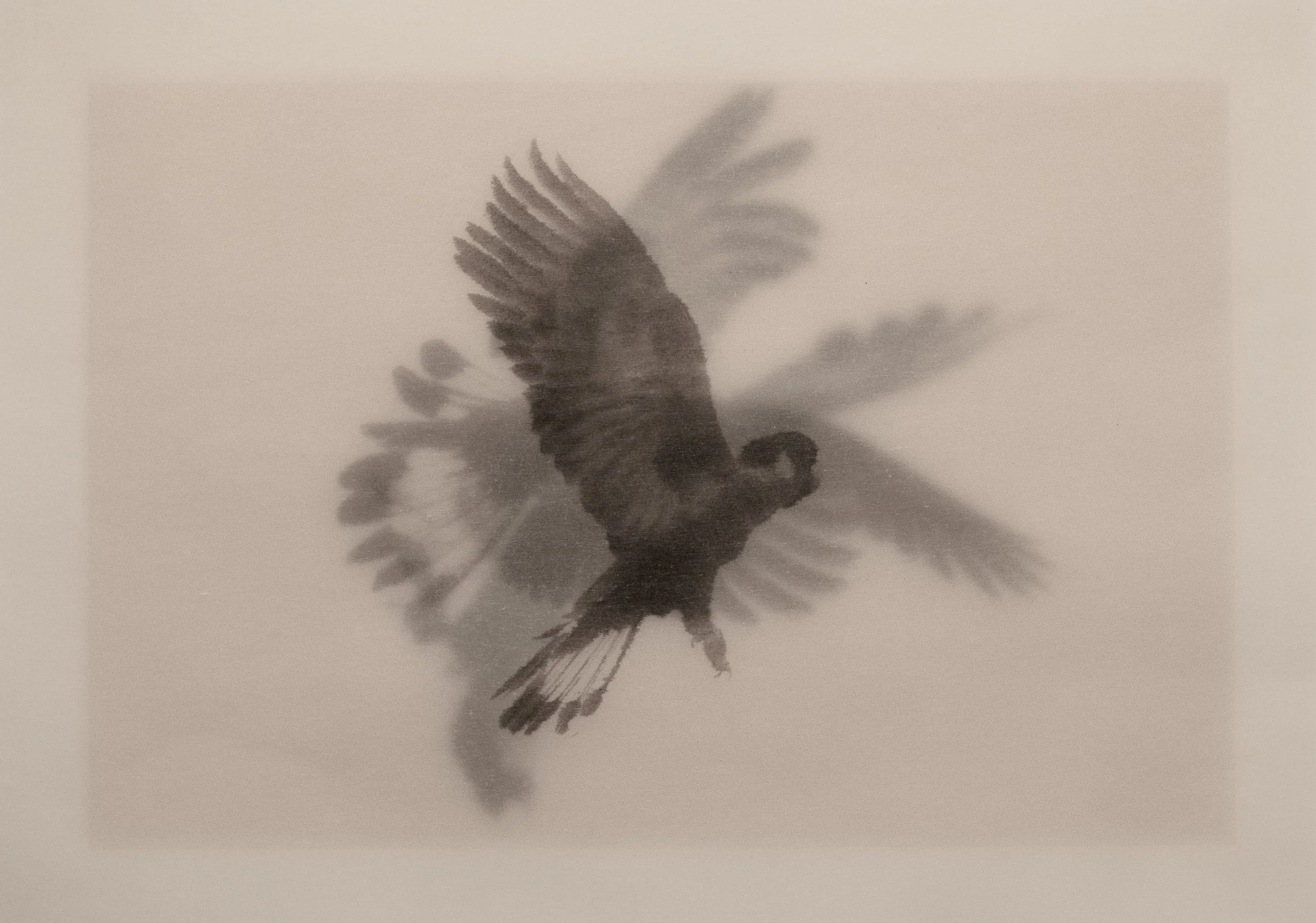
Traces #5, 2025
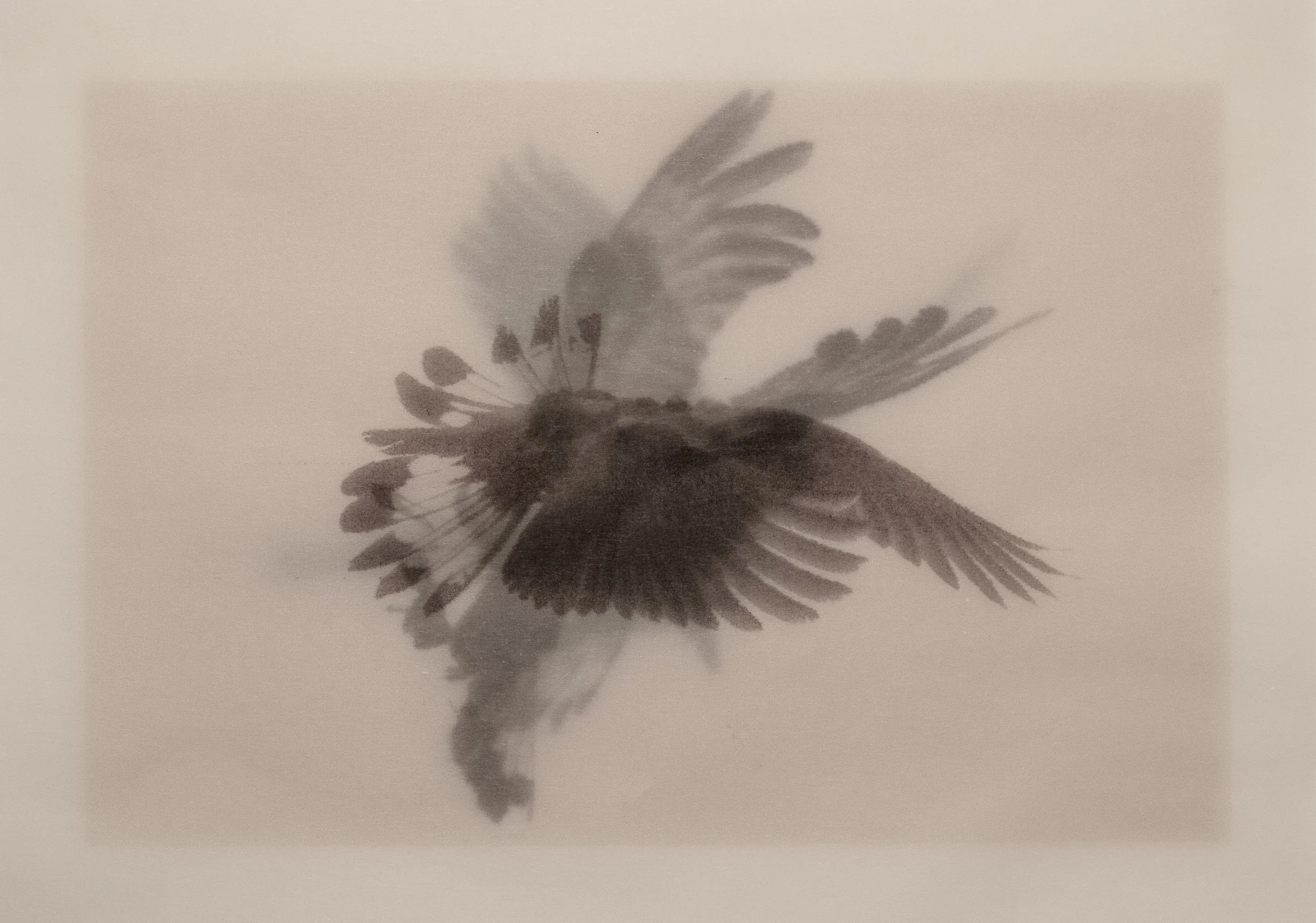
Traces #6, 2025
Traces, 2025, imagery projected at large scale in sequence.
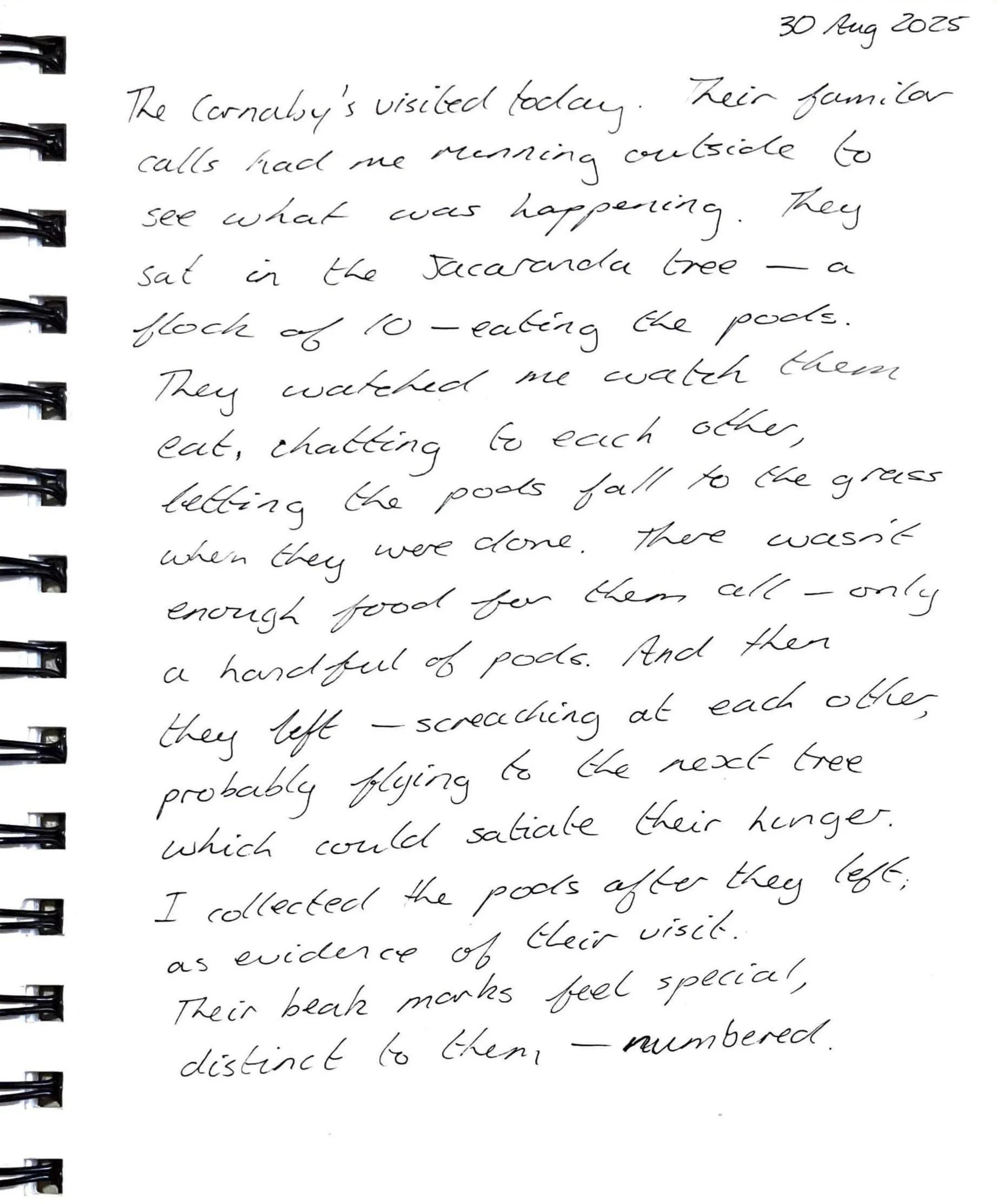
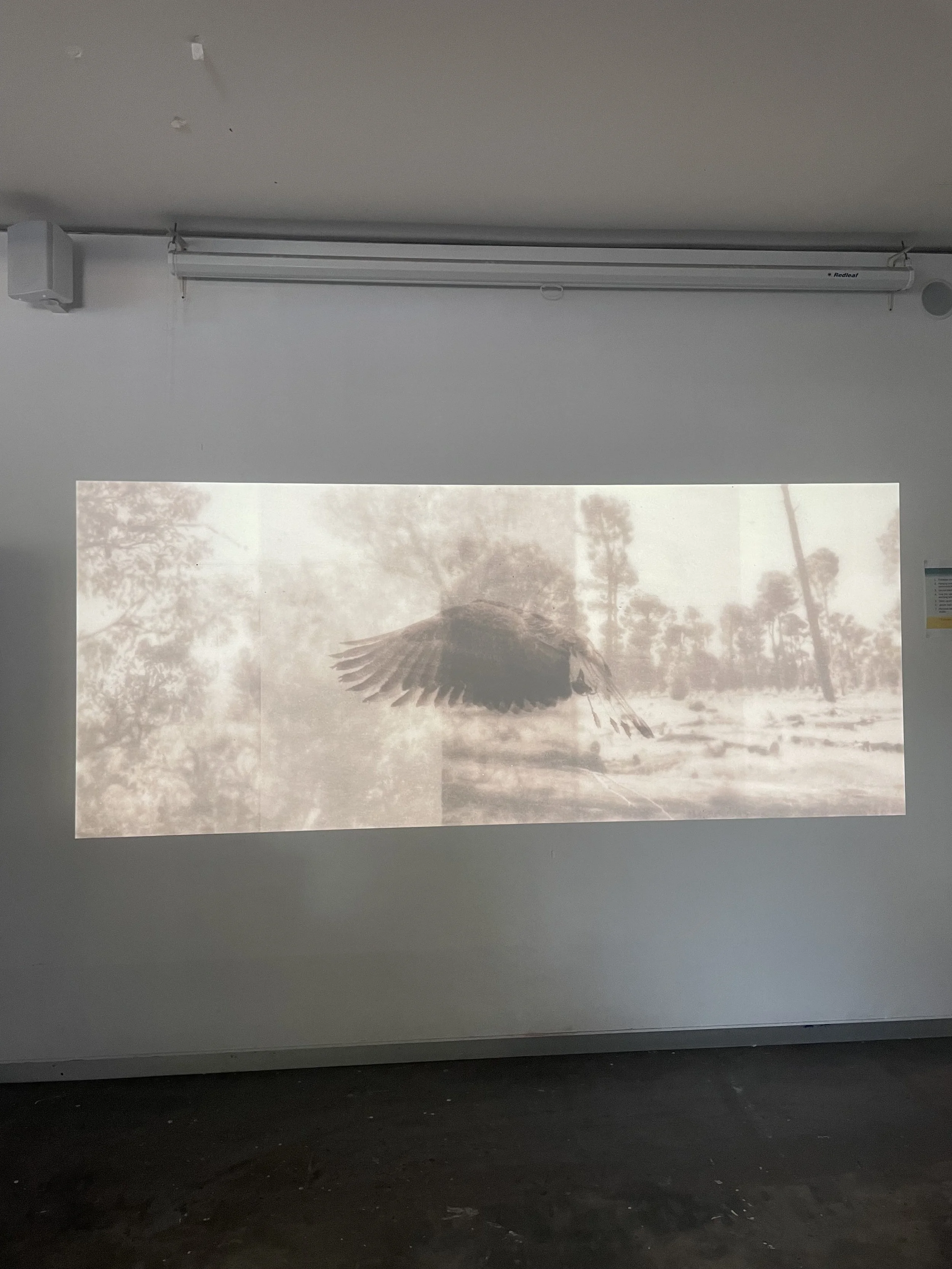
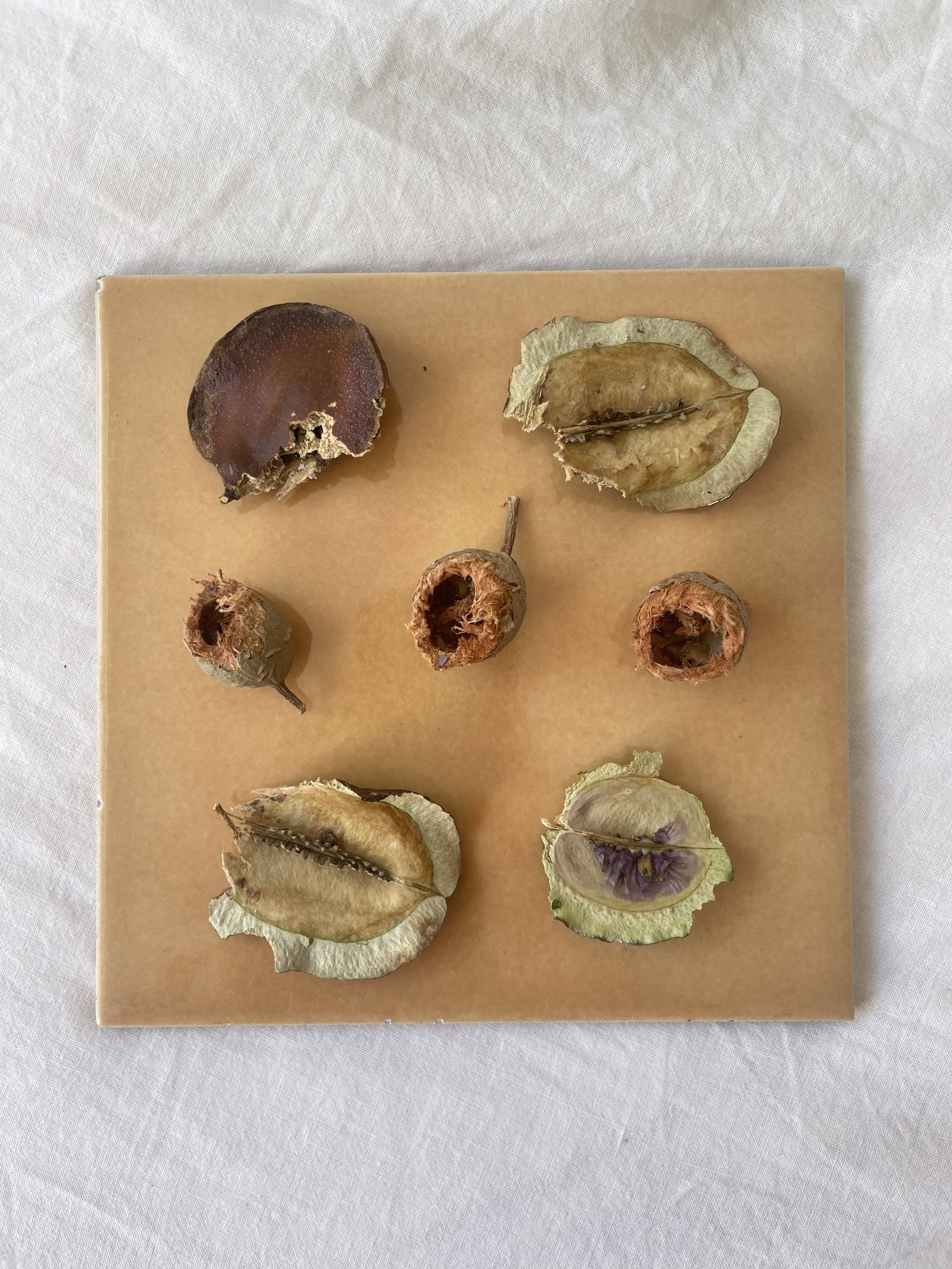
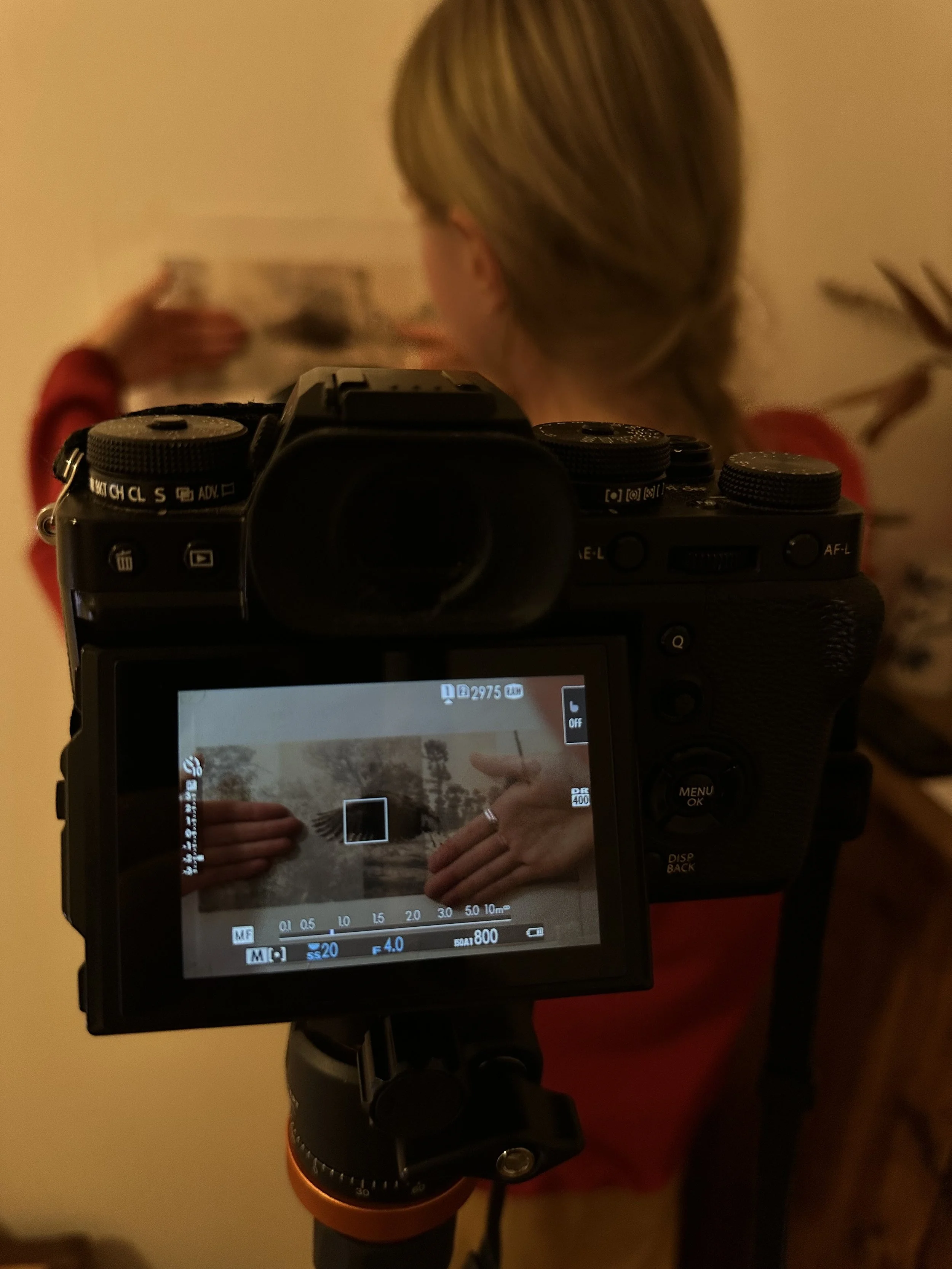
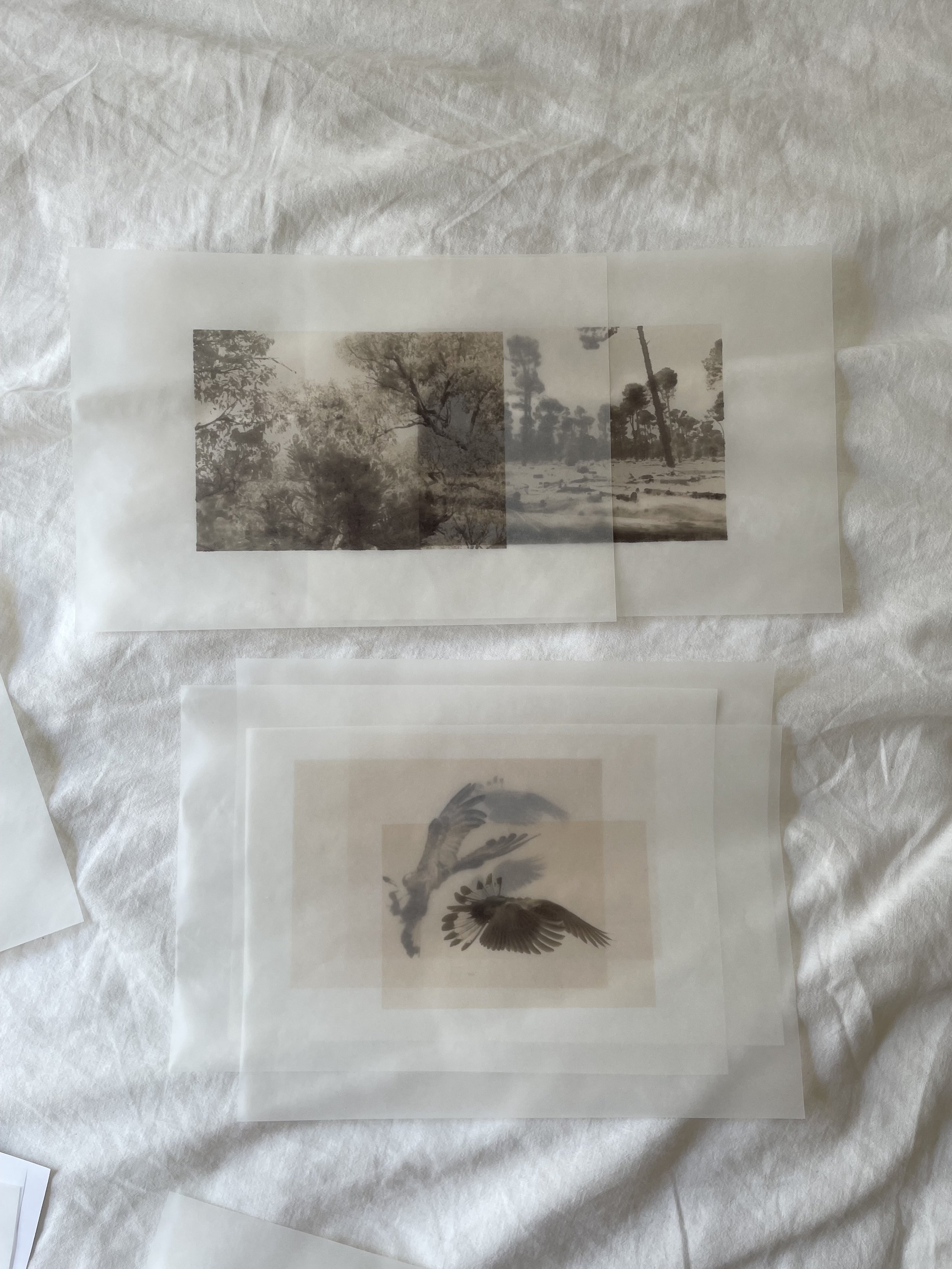
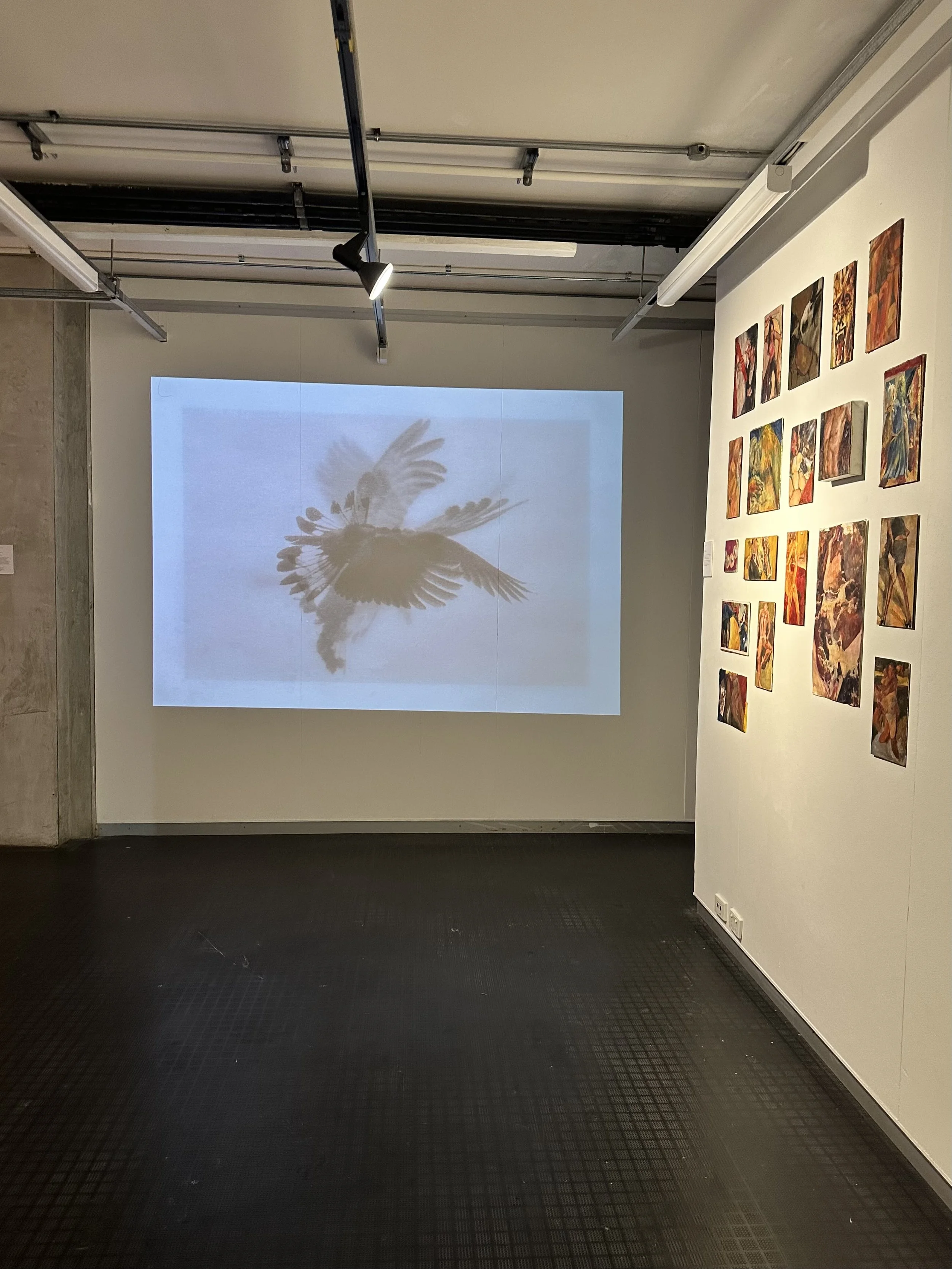
Traces, process images and install, 2025
1. Jane Hammond, "The Cockatoo Crisis." SBS, 2022.